OXYGEN TRANSPORT
THE hidden WAY car emissions CAN KILL YOU.
Traffic pollution invades your home—triggering respiratory distress often mistaken for bad indoor air or asthma, while hidden toxins silently block your body’s smallest blood vessels.
Children are among those particularly vulnerable to traffic-related air pollution.

ATP
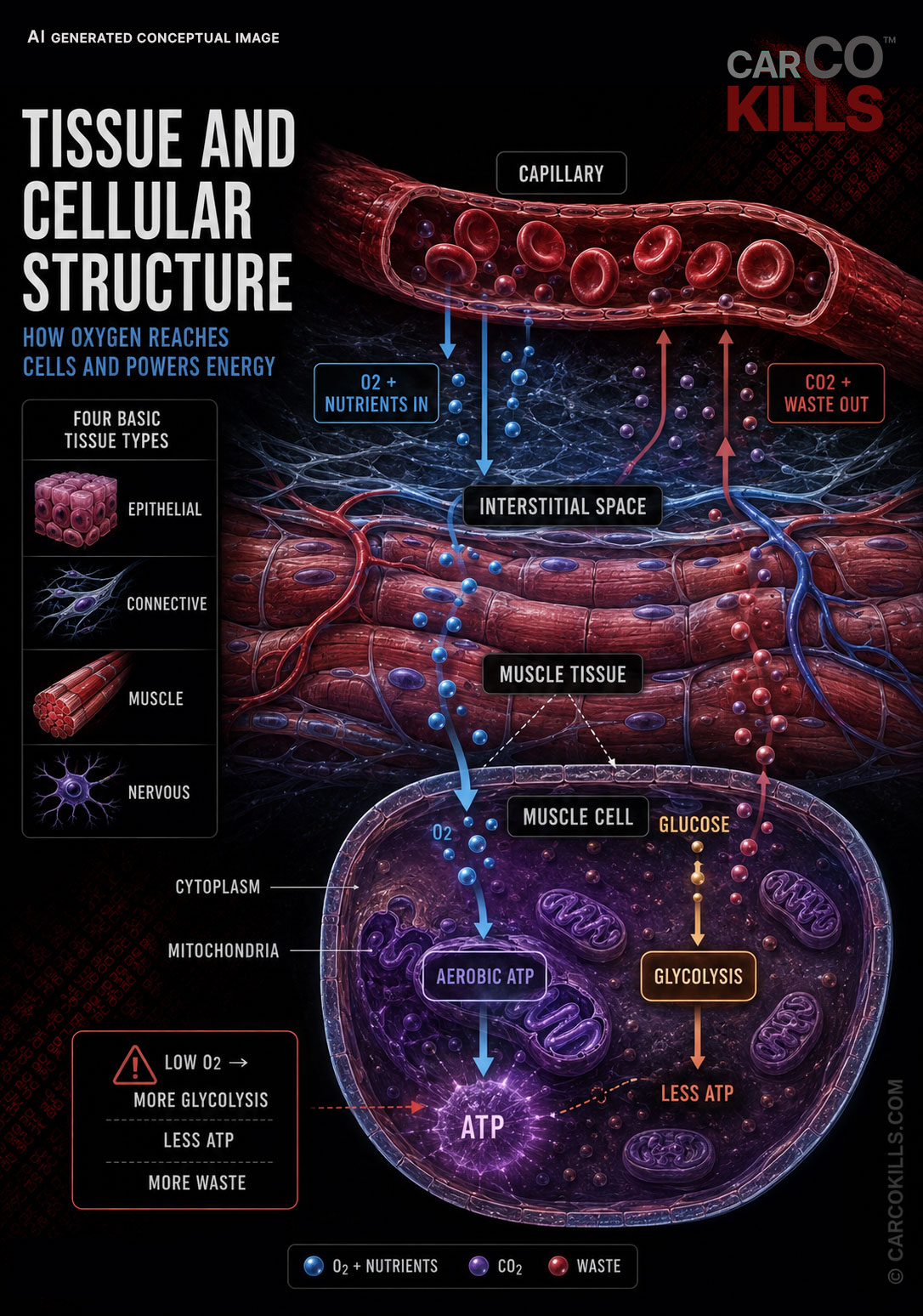
ATP is the primary energy molecule used by cells. Nearly all cellular functions — including muscle activity, nerve signaling, and repair processes — depend on ATP availability.
Carbon monoxide (CO)
Carbon monoxide is a gas that binds strongly to hemoglobin and interferes with oxygen transport. Even low-level exposure can reduce oxygen delivery to tissues and increase physiological stress.
Cellular energy production
Cellular energy production refers to the processes cells use to generate ATP. Under normal conditions, this mainly occurs through oxygen-dependent mitochondrial respiration.
Chronic hypoxia
Chronic hypoxia means tissues experience long-term reduced oxygen availability. This can force the body into continuous compensatory stress responses and altered metabolism.
Circulation
Circulation is the movement of blood through the body. It delivers oxygen and nutrients to tissues while removing carbon dioxide and waste products.
Compensatory mechanism
A compensatory mechanism is the body’s attempt to maintain stability during dysfunction or stress. These responses may help temporarily, but chronic compensation can eventually contribute to symptoms.
Dysautonomia
Dysautonomia refers to dysfunction of the autonomic nervous system. It can affect heart rate, blood pressure, circulation, digestion, temperature regulation, and stress responses.
Endothelial dysfunction
Endothelial dysfunction means the inner lining of blood vessels no longer regulates circulation normally. This can impair blood flow control, oxygen delivery, vascular relaxation, and microcirculation.
Endothelium
The endothelium is the thin inner lining of blood vessels. It plays a central role in regulating blood flow, vascular tone, inflammation, and oxygen delivery.
Energy deficit
An energy deficit occurs when cells cannot produce enough ATP to meet demand. This can contribute to fatigue, reduced physical capacity, impaired recovery, and physiological stress.
Glycolysis
Glycolysis is a form of energy production that does not require oxygen. It is less efficient than mitochondrial respiration and produces lactate as a byproduct.
Hypoxia
Hypoxia means insufficient oxygen availability at the tissue level. Even when blood oxygen appears normal, impaired circulation can still create localized hypoxia.
Insulin resistance
Insulin resistance occurs when cells respond poorly to insulin signaling. This disrupts glucose regulation and is commonly associated with metabolic dysfunction.
Lactic acid
Lactic acid is produced when cells rely more heavily on glycolysis for energy production. Increased lactic acid production can occur during hypoxia or impaired oxygen utilization.
Lactate
Lactate is a metabolic byproduct generated during glycolysis. Elevated lactate levels may indicate increased reliance on anaerobic energy production.
Metabolic dysfunction
Metabolic dysfunction refers to impaired regulation of energy production and cellular metabolism. It can affect glucose handling, mitochondrial function, circulation, and stress physiology.
Metabolism
Metabolism includes all chemical processes required to maintain cellular function and energy production. It involves how the body uses oxygen, nutrients, and energy.
Microcirculation
Microcirculation refers to blood flow through the body’s smallest vessels, including capillaries. This system is critical for oxygen delivery directly to tissues.
Microvascular dysfunction
Microvascular dysfunction means small blood vessels no longer regulate blood flow properly. This can create uneven oxygen delivery and localized tissue stress.
Mitochondria
Mitochondria are structures inside cells responsible for most ATP production. They generate energy primarily through oxygen-dependent metabolism.
Nitric oxide (NO)
Nitric oxide is a signaling molecule that helps blood vessels relax and regulate circulation. Reduced nitric oxide activity can contribute to vascular dysfunction and impaired blood flow.
Oxidative phosphorylation
Oxidative phosphorylation is the mitochondria’s primary oxygen-dependent energy production pathway. It produces large amounts of ATP under normal physiological conditions.
Oxidative stress
Oxidative stress occurs when reactive oxygen species exceed the body’s antioxidant defenses. Excess oxidative stress can damage cells, blood vessels, and cellular signaling systems.
Oxygen delivery
Oxygen delivery refers to the transport of oxygen from the lungs to tissues. This depends on blood flow, hemoglobin function, vascular regulation, and microcirculation.
Parasympathetic nervous system
The parasympathetic nervous system supports recovery, repair, digestion, and energy conservation. It is often described as the body’s “rest and recovery” system.
Perfusion
Perfusion refers to blood flow reaching tissues and organs. Reduced perfusion can impair oxygen and nutrient delivery even when circulation is still present.
Physiological stress
Physiological stress refers to biological strain placed on the body. This can result from impaired oxygen delivery, metabolic imbalance, inflammation, or chronic compensation.
Redox balance
Redox balance refers to the balance between oxidation and antioxidant defense systems. Disruption of redox balance can contribute to oxidative stress and cellular dysfunction.
Sympathetic nervous system
The sympathetic nervous system activates the body’s stress response. It increases heart rate, blood pressure, alertness, and circulatory compensation during physiological stress.
Tissue hypoxia
Tissue hypoxia means specific tissues are not receiving sufficient oxygen. This may occur even when standard oxygen measurements appear normal.
Vasoconstriction
Vasoconstriction means blood vessels narrow. This can reduce blood flow to tissues and increase circulatory resistance.
Vasodilation
Vasodilation means blood vessels relax and widen. This improves blood flow, oxygen delivery, and tissue perfusion.
The information provided here is for educational purposes only and is not intended as medical advice. Some content discusses hypotheses and proposed biological mechanisms based on an integration of published research. It should not be used to diagnose, treat, cure, or prevent any medical condition. Use this information as a starting point for discussion with a qualified healthcare provider before making decisions about medications, supplements, devices, or changes to your health regimen. See full disclaimer and ai disclosure.
The Mechanical Structure of a Capillary
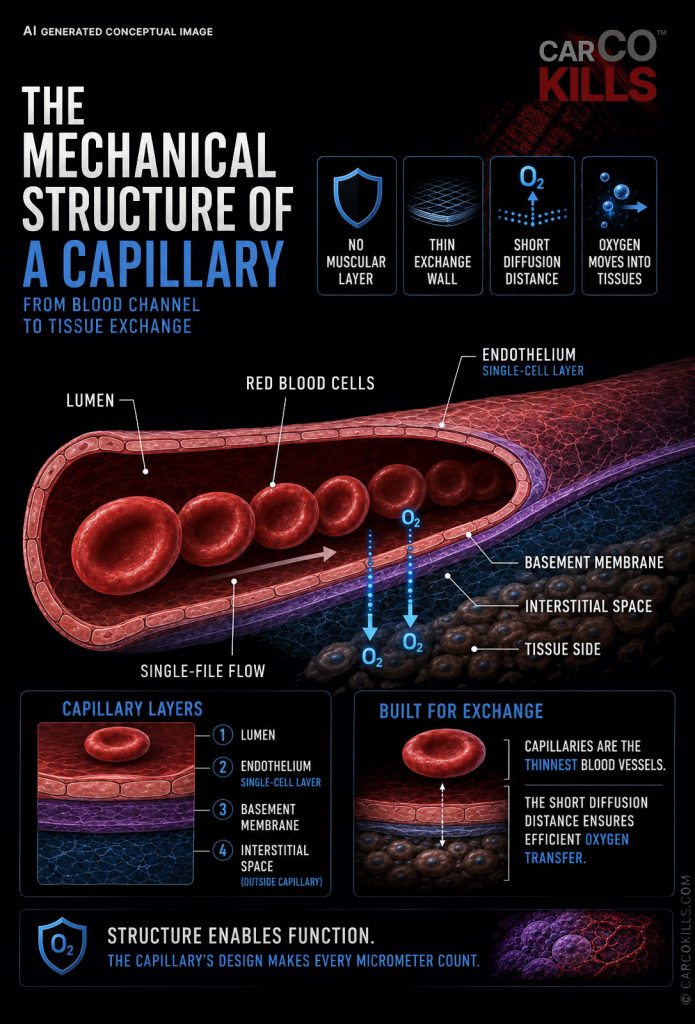
Capillaries are the thinnest blood vessels in the body. Their structure is designed to allow substances to move between the blood and surrounding tissues. Unlike larger blood vessels, the capillary wall has no muscular layer that regulates blood flow.
From the inside outward, a capillary consists of a lumen, a single layer of endothelial cells, a basement membrane, and the surrounding interstitial space.
Internal Structure and Blood Flow
The inside of the capillary forms the space through which blood and the substances it carries physically move at the microscopic level.
The Capillary Channel
At the center of the capillary is the lumen, which serves as the channel through which blood flows. Its diameter is so small that red blood cells can pass through only in a single file.
This narrow space reduces the distance between the red blood cells and the capillary wall, making the transfer of oxygen from the blood to the surrounding tissues more efficient.
Endothelial Cells and the Single-Cell Layer
The lumen is surrounded by the endothelium, which consists of a single layer of cells. This cell layer is in direct contact with the circulating blood and functions as both a mechanical barrier and a selective filter.
The junctions and seams between endothelial cells keep the vessel wall intact and regulate the movement of substances from the bloodstream into the tissues.
Cellular Components and External Support Structures
Endothelial Cell Mitochondria
Mitochondria are located in the cytoplasm of endothelial cells. They use oxygen and energy-containing molecules derived from nutrients to produce ATP.
ATP serves as the cell’s usable energy and supports functions such as heme production, iron handling, and the maintenance of cellular structure and function.
Basement Membrane and Interstitial Space
Endothelial cells rest on a thin, continuous basement membrane. The basement membrane provides mechanical support for the capillary.
Outside the basement membrane lies the interstitial space, a tissue-fluid-filled area between the blood vessel and the surrounding tissue cells.
All substances moving from the capillary into the tissues must pass through this space before reaching the tissue cells.

site updates
The site is continuously updated.
Sources are under review, content will be added to existing topics, and more images will be brought to the site later.
NEW CONTENT COMING:
- News
– Rights to clean air