CO POISONING OUTDOORS
THE hidden WAY car emissions CAN KILL YOU.
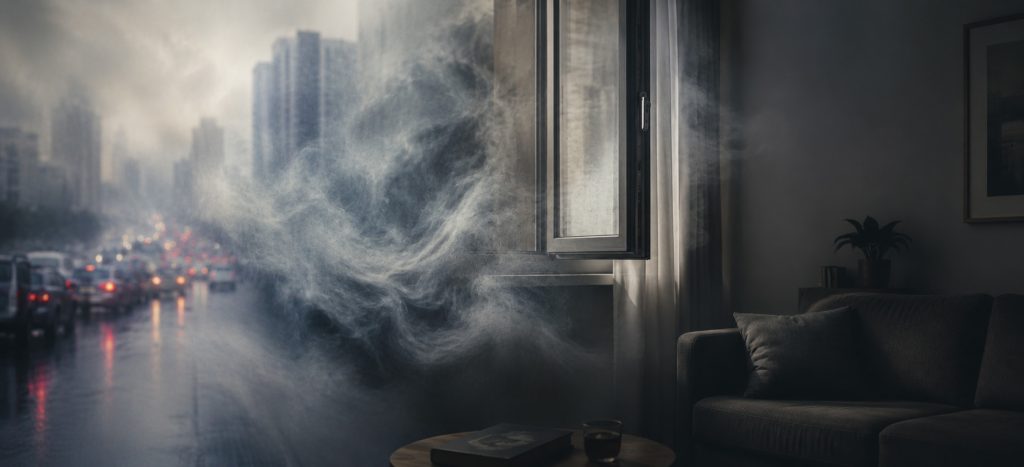
Traffic pollution invades your home—triggering respiratory distress often mistaken for bad indoor air or asthma, while hidden toxins silently block your body’s smallest blood vessels.
Children are among those particularly vulnerable to traffic-related air pollution.

ATP
ATP is the primary energy molecule used by cells. Nearly all cellular functions — including muscle activity, nerve signaling, and repair processes — depend on ATP availability.
Carbon monoxide (CO)
Carbon monoxide is a gas that binds strongly to hemoglobin and interferes with oxygen transport. Even low-level exposure can reduce oxygen delivery to tissues and increase physiological stress.
Cellular energy production
Cellular energy production refers to the processes cells use to generate ATP. Under normal conditions, this mainly occurs through oxygen-dependent mitochondrial respiration.
Chronic hypoxia
Chronic hypoxia means tissues experience long-term reduced oxygen availability. This can force the body into continuous compensatory stress responses and altered metabolism.
Circulation
Circulation is the movement of blood through the body. It delivers oxygen and nutrients to tissues while removing carbon dioxide and waste products.
Compensatory mechanism
A compensatory mechanism is the body’s attempt to maintain stability during dysfunction or stress. These responses may help temporarily, but chronic compensation can eventually contribute to symptoms.
Dysautonomia
Dysautonomia refers to dysfunction of the autonomic nervous system. It can affect heart rate, blood pressure, circulation, digestion, temperature regulation, and stress responses.
Endothelial dysfunction
Endothelial dysfunction means the inner lining of blood vessels no longer regulates circulation normally. This can impair blood flow control, oxygen delivery, vascular relaxation, and microcirculation.
Endothelium
The endothelium is the thin inner lining of blood vessels. It plays a central role in regulating blood flow, vascular tone, inflammation, and oxygen delivery.
Energy deficit
An energy deficit occurs when cells cannot produce enough ATP to meet demand. This can contribute to fatigue, reduced physical capacity, impaired recovery, and physiological stress.
Glycolysis
Glycolysis is a form of energy production that does not require oxygen. It is less efficient than mitochondrial respiration and produces lactate as a byproduct.
Hypoxia
Hypoxia means insufficient oxygen availability at the tissue level. Even when blood oxygen appears normal, impaired circulation can still create localized hypoxia.
Insulin resistance
Insulin resistance occurs when cells respond poorly to insulin signaling. This disrupts glucose regulation and is commonly associated with metabolic dysfunction.
Lactic acid
Lactic acid is produced when cells rely more heavily on glycolysis for energy production. Increased lactic acid production can occur during hypoxia or impaired oxygen utilization.
Lactate
Lactate is a metabolic byproduct generated during glycolysis. Elevated lactate levels may indicate increased reliance on anaerobic energy production.
Metabolic dysfunction
Metabolic dysfunction refers to impaired regulation of energy production and cellular metabolism. It can affect glucose handling, mitochondrial function, circulation, and stress physiology.
Metabolism
Metabolism includes all chemical processes required to maintain cellular function and energy production. It involves how the body uses oxygen, nutrients, and energy.
Microcirculation
Microcirculation refers to blood flow through the body’s smallest vessels, including capillaries. This system is critical for oxygen delivery directly to tissues.
Microvascular dysfunction
Microvascular dysfunction means small blood vessels no longer regulate blood flow properly. This can create uneven oxygen delivery and localized tissue stress.
Mitochondria
Mitochondria are structures inside cells responsible for most ATP production. They generate energy primarily through oxygen-dependent metabolism.
Nitric oxide (NO)
Nitric oxide is a signaling molecule that helps blood vessels relax and regulate circulation. Reduced nitric oxide activity can contribute to vascular dysfunction and impaired blood flow.
Oxidative phosphorylation
Oxidative phosphorylation is the mitochondria’s primary oxygen-dependent energy production pathway. It produces large amounts of ATP under normal physiological conditions.
Oxidative stress
Oxidative stress occurs when reactive oxygen species exceed the body’s antioxidant defenses. Excess oxidative stress can damage cells, blood vessels, and cellular signaling systems.
Oxygen delivery
Oxygen delivery refers to the transport of oxygen from the lungs to tissues. This depends on blood flow, hemoglobin function, vascular regulation, and microcirculation.
Parasympathetic nervous system
The parasympathetic nervous system supports recovery, repair, digestion, and energy conservation. It is often described as the body’s “rest and recovery” system.
Perfusion
Perfusion refers to blood flow reaching tissues and organs. Reduced perfusion can impair oxygen and nutrient delivery even when circulation is still present.
Physiological stress
Physiological stress refers to biological strain placed on the body. This can result from impaired oxygen delivery, metabolic imbalance, inflammation, or chronic compensation.
Redox balance
Redox balance refers to the balance between oxidation and antioxidant defense systems. Disruption of redox balance can contribute to oxidative stress and cellular dysfunction.
Sympathetic nervous system
The sympathetic nervous system activates the body’s stress response. It increases heart rate, blood pressure, alertness, and circulatory compensation during physiological stress.
Tissue hypoxia
Tissue hypoxia means specific tissues are not receiving sufficient oxygen. This may occur even when standard oxygen measurements appear normal.
Vasoconstriction
Vasoconstriction means blood vessels narrow. This can reduce blood flow to tissues and increase circulatory resistance.
Vasodilation
Vasodilation means blood vessels relax and widen. This improves blood flow, oxygen delivery, and tissue perfusion.
The information provided here is for educational purposes only and is not intended as medical advice. Some content discusses hypotheses and proposed biological mechanisms based on an integration of published research. It should not be used to diagnose, treat, cure, or prevent any medical condition. Use this information as a starting point for discussion with a qualified healthcare provider before making decisions about medications, supplements, devices, or changes to your health regimen. See full disclaimer and ai disclosure.
CARBON MONOXIDE POISONING DOES NOT REQUIRE A CLOSED SPACE
This page explains why carbon monoxide poisoning does not require a closed space. It describes how airflow, urban structures, and weather conditions can limit air replacement and allow exhaust gases to accumulate outdoors, creating conditions in which outdoor exposure may persist despite the absence of an enclosed environment.
Airflow Determines Risk — Not Walls
The Fundamental Physics of Accumulation
The key factor in toxic gas buildup is not whether a space is enclosed. The key factor is simply whether air is moving. If airflow is limited, a specific physical breakdown occurs:
- Fresh air does not enter fast enough.
- Polluted air does not leave fast enough.
- Carbon monoxide accumulates in the space.
This is the exact same physical mechanism that makes enclosed garages dangerous. A closed garage becomes hazardous because engine emissions continue while structural air replacement fails. This identical process can occur outdoors if environmental airflow becomes too weak.
Outdoor Environments Can Function Like Enclosed Spaces
Structural Trapping Zones
Under certain conditions, outdoor environments can function like closed spaces. This occurs when wind is weak, local geometry restricts airflow, and vertical mixing becomes blocked. Examples of these outdoor structural traps include:
- Building corners and courtyards.
- Narrow streets and driveways.
- Sheltered areas and zones shielded from wind.
- Areas directly near idling engines or working machines.
In these specific locations, being outside does not automatically mean the air is ventilated.
Input Exceeds Removal
If emissions continue while atmospheric dispersion remains limited, pollutants remain within a confined air volume, concentrations increase over time, and people breathe increasingly polluted air. This is mechanically identical to a closed garage where input exceeds removal. The space does not need to be sealed; air replacement only needs to be too slow.
Weather Factors: The Thermal Lid
Suppressing Vertical Dispersion
In certain weather conditions, a distinct atmospheric layering occurs where warmer air sits directly above cooler air. This thermal dynamic suppresses normal vertical movement, meaning pollutants cannot rise and disperse.
This environment creates a thermal lid over the area:
- Step 1: Emissions remain trapped near ground level.
- Step 2: Pollutants stay concentrated within the human breathing zone.
- Step 3: Toxic exposure continues in the exact same location.
This vertical blockade can persist for hours, overnight, or even multiple days during heat waves or stable atmospheric conditions.

Stagnant Zones and Poisoning Conditions
Compounding Environmental Effects
At building corners, sheltered areas, driveways, and other wind-protected locations, localized airflow can drop close to zero, preventing pollutants from being removed efficiently. If this stagnant state combines with an atmospheric thermal lid, a severe trap is formed:
- The pollutants cannot rise vertically.
- The pollutants cannot disperse horizontally.
- They remain heavily concentrated and trapped in place.
An outdoor area becomes a high-risk exposure zone not because it has walls, but because the air is not being replaced.
Reaching Toxic Thresholds Outdoors
Under combined environmental conditions—such as low wind, restricted structural geometry, thermal layering, and continuous vehicle emissions—carbon monoxide can accumulate outdoors to dangerous levels. This means carbon monoxide poisoning can occur completely outdoors; open air does not guarantee safety, and airflow alone determines whether exposure is removed or concentrated.
Summary: The Air Replacement Rule
Structural vs. Environmental Stagnation
A closed garage is dangerous because physical walls prevent air from moving fast enough to remove emissions. The exact same condition can occur outdoors through environmental stagnation.
If the surrounding air is not moving:
- Carbon monoxide accumulates in the immediate area.
- Localized exposure increases.
- Carbon monoxide poisoning can occur without an indoor source.
Bottom Line
Open Air Illusion: Open air provides no guarantee of safety; under the right atmospheric conditions, outdoor carbon monoxide can accumulate to acute poisoning levels.
Airflow Over Architecture: Carbon monoxide poisoning does not require a closed space; it requires insufficient airflow.
The Garage Mechanism: The same physical failure that makes enclosed garages dangerous—input exceeding removal—occurs outdoors when wind drops.
Outdoor Traps: Building corners, narrow streets, courtyards, and driveways can function exactly like closed spaces when geometry blocks air movement.
The Thermal Barrier: Temperature inversions create a functional lid that holds vehicle exhaust down in the breathing zone for hours or days.
Stagnation Synergy: When wind-shielded microclimates combine with a thermal lid, airflow drops to zero and pollutants are entirely trapped.
Sources
U.S. Environmental Protection Agency. (2025). Basic information about carbon monoxide (CO) outdoor air pollution. https://www.epa.gov/co-pollution/basic-information-about-carbon-monoxide-co-outdoor-air-pollution
National Center for Outdoor & Adventure Education. (2023). Stay safe from carbon monoxide poisoning while outdoors. https://www.ncoaa.us/post/stay-safe-from-carbon-monoxide-poisoning-while-outdoors
Airly. (n.d.). What is a temperature inversion? https://airly.org/en/what-is-temperature-inversion/
Glojek, K., et al. (2022). The impact of temperature inversions on black carbon and particle mass concentrations in a hilly rural area. Atmospheric Chemistry and Physics, 22(9), 5577–5596. https://acp.copernicus.org/articles/22/5577/2022/
Osawa, M., et al. (2003). A death in a stationary vehicle whilst idling: Unusual carbon monoxide poisoning by exhaust gases. Legal Medicine, 5(Suppl 1), S132–S134. https://pubmed.ncbi.nlm.nih.gov/12935571/
Ruan, H. L., et al. (2021). Carbon monoxide poisoning: A prediction model using meteorological factors and air pollutant data. BMC Public Health. https://pmc.ncbi.nlm.nih.gov/articles/PMC7923450/
site updates
The site is continuously updated.
Sources are under review, content will be added to existing topics, and more images will be brought to the site later.
NEW CONTENT COMING:
- News
– Rights to clean air